The Components You Don't Think About Until Something Goes Wrong
Most Oak Lawn homeowners pay attention to their garage door when it looks damaged or when the opener acts up — but the cables, rollers, and tracks that actually move the door every day rarely get a second thought. That's understandable. When everything works, these components are invisible. When one of them fails, the door can jam, tilt, fall, or simply stop mid-travel at the worst possible moment.
Understanding how long each component typically lasts and what signs of wear look like gives you the ability to address problems early — before a minor maintenance issue becomes an emergency repair. Here's what every Oak Lawn homeowner should know.
Garage Door Cables: The Invisible Load-Bearers
Lift cables are galvanized steel wires that run from the bottom bracket on each side of the door up to the cable drums on the torsion shaft above. Every time the door opens or closes, the cables wind and unwind around those drums, bearing the full weight of the door in tandem with the springs. A standard residential garage door may cycle 1,500 or more times per year in a busy household.
Typical lifespan: 7 to 12 years with normal use, though this varies significantly with moisture exposure, maintenance frequency, and spring health. A broken spring puts extreme uneven load on the cables and can cause them to snap or jump off the drum even if they weren't close to the end of their normal life.
Warning signs to watch for:
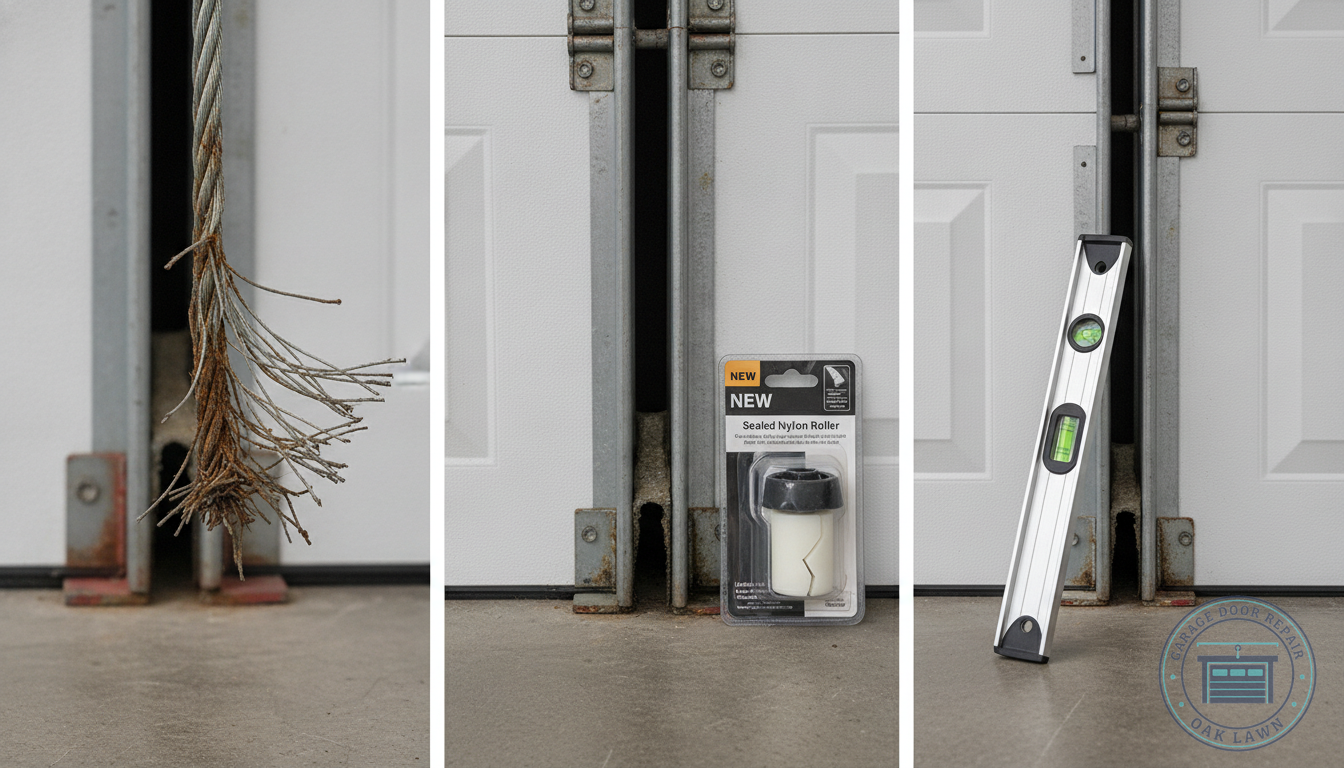
- Visible fraying, kinking, or rust along the cable's length
- The door rising unevenly or appearing tilted during operation
- A cable hanging loose near the bottom bracket or lying on the floor
- The door slamming down on one side when closing
If you notice any of these signs, stop using the opener immediately and schedule a garage door cable repair or replacement. A fully snapped cable can cause the door to drop suddenly, and operating a door with one failed cable puts the remaining cable under double the load.
Maintenance tip: Keep cables dry and inspect them visually every few months. Avoid using any lubricant directly on the cables — they're designed to run dry. If your garage is exposed to humidity or road salt (common in the Oak Lawn area given our winters), inspect more frequently for early corrosion.
Garage Door Rollers: The Quiet Performers
Rollers are the small wheeled components that ride inside the vertical and horizontal tracks as the door travels. A typical residential garage door has ten to twelve rollers. They're easy to overlook because they're small, but worn rollers are one of the most common causes of a noisy, jerky door — and they accelerate wear on the tracks and opener when left in poor condition.
Typical lifespan:
- Standard steel rollers: 10,000 to 15,000 cycles — roughly 5 to 7 years for a door used four times daily
- Nylon rollers with sealed ball bearings: Up to 100,000 cycles — a significant upgrade that can last 20 or more years with proper lubrication
Warning signs to watch for:
- A grinding, rattling, or squealing noise during door travel
- The door jerking or hesitating as it moves along the tracks
- Visible cracks or flat spots on the roller wheel
- A bent or wobbly roller stem inside the hinge bracket
Our technicians replace full sets of rollers in a single visit, since rollers of the same age wear at similar rates. See our roller replacement service page for details on the nylon and steel options we stock. Roller replacement is one of the highest-impact, lowest-cost maintenance upgrades an Oak Lawn homeowner can make — it often makes an aging door feel and sound nearly new.
Maintenance tip: Apply a silicone-based or lithium-grease lubricant to the roller stems (not the wheels) once or twice a year. Avoid petroleum-based sprays, which attract dust and grit that accelerate bearing wear. Lubrication matters even more during Illinois winters, when cold temperatures cause metal components to contract and increase friction.
Garage Door Tracks: The Foundation of Safe Operation
Steel C-channel tracks guide the rollers from the vertical position alongside the door opening up through the curved section and along the horizontal run to the back of the garage. They must be precisely aligned, properly spaced, and securely mounted to keep the door traveling smoothly. Unlike springs and cables, tracks don't have a finite cycle life — a well-maintained track can outlast the door itself. The problem is the mounting hardware and the physical condition of the track sections.
Common causes of track problems:
- Vehicle impact — bumping a track with the car is one of the most common causes of bends and dents in vertical track sections
- Loose mounting hardware — the lag bolts and bracket screws that secure the track to the wall framing can vibrate loose over time, causing the track to shift out of plumb
- Corrosion at track joints — where two sections of track connect, moisture can cause rust and separation, creating a lip that catches the rollers
- Improper installation — tracks installed without correct spacing or pitch will cause problems from day one, compounding over time
Warning signs to watch for:
- Scraping or grinding noise that increases when the door passes a specific point
- The door stopping mid-travel and triggering the opener's overload protection
- Visible gaps between the rollers and the inside of the track
- A track that appears to lean inward or outward when viewed from the side
Schedule a track repair and alignment service if you notice any of these symptoms. Minor bends can often be carefully straightened without replacing the section. Severe kinks or cracked joints require section replacement for safe operation.
Maintenance tip: Inspect the lag bolts securing the track mounting brackets to the wall annually and tighten any that have worked loose. Wipe the inside of the track with a dry cloth to remove grit and debris — avoid lubricating the inside of the track itself, as a slippery track can cause rollers to skip.
How These Components Interact — and Why One Failure Leads to Another
Cables, rollers, and tracks don't operate in isolation. A broken spring puts abnormal load on the cables. Worn rollers increase friction and cause the opener to work harder, straining the motor. A bent track catches and damages rollers. Damaged rollers cause the door to travel unevenly, eventually pulling cables off their drums. This interconnected nature is why our technicians inspect all of these components together during every service call — catching one worn part early often prevents two or three additional failures down the road.
Recommended Maintenance Schedule for Oak Lawn Homeowners
- Monthly: Visual inspection of cables for fraying or rust; listen for new noises during door travel
- Every 6 months: Lubricate roller stems, hinge pivot points, and the opener's drive chain or belt with an appropriate lubricant
- Annually: Tighten all visible mounting hardware on tracks and opener brackets; test door balance by disconnecting the opener and lifting manually; inspect spring coils for wear
- Every 5–7 years: Consider a professional tune-up that includes roller replacement, cable inspection, track alignment check, and spring assessment
Service Throughout Oak Lawn and the Southwest Chicago Suburbs
Garage Door Repair Oak Lawn provides cable, roller, and track services seven days a week from our location at 4544 W 103rd St. We serve all Oak Lawn neighborhoods and surrounding communities including Chicago Ridge, Burbank, Hometown, Worth, Alsip, and Evergreen Park.
Whether you need a quick cable inspection or a complete system tune-up, call us at (708) 627-9213 or email [email protected]. Our team is available 8 AM to 6 PM daily to keep your garage door running safely and quietly year-round.