When the Opener Is the Problem — and When It Isn't
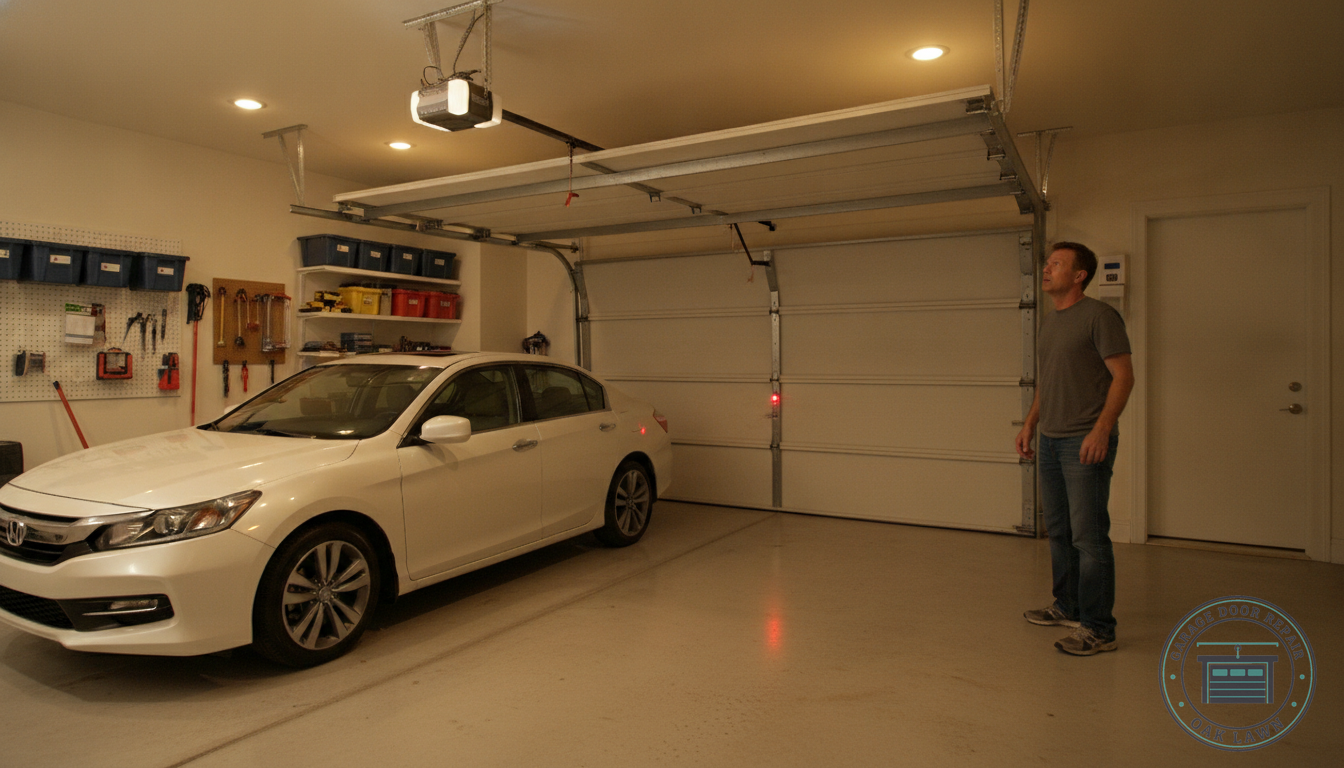
A garage door that won't open or close properly is frustrating, but the cause isn't always the opener itself. Because the opener, springs, cables, and tracks all work as one interconnected system, a problem with any one component shows up as a door that won't cooperate. Before assuming your opener needs replacement, it pays to understand exactly what you're seeing — and hearing — so you can describe the symptom accurately when you call for service.
This guide covers the most common garage door opener problems Oak Lawn homeowners encounter, what typically causes them, and when it's safe to troubleshoot yourself versus when you need a professional.
Problem 1: The Opener Hums but the Door Doesn't Move
This is one of the most frequently misunderstood garage door symptoms. When the opener motor runs but the door stays put, most homeowners assume the motor is dead — but that's rarely the case. A humming motor that produces no movement usually points to one of three causes:
- A broken torsion spring — the door is too heavy for the opener to lift without spring assistance. This is the most common culprit and is a safety issue. See our spring replacement service for details.
- A stripped drive gear — the plastic gear inside the opener's gearbox has worn down and can no longer engage the drive chain or belt.
- A failed start capacitor — the capacitor that provides the initial burst of power to the motor has failed, leaving the motor unable to start turning under load even though it receives power.
All three of these require a technician. Continuing to activate the opener while the door is stuck can burn out the motor entirely.
Problem 2: The Door Reverses Before Closing All the Way
An opener that consistently reverses before the door reaches the floor is usually experiencing one of two issues: misaligned or dirty photo-eye sensors, or an incorrect close-force limit setting. The photo-eye sensors — the two small units mounted a few inches off the ground on each side of the door opening — send an infrared beam across the doorway. If anything breaks the beam, or if the sensors are knocked out of alignment so they can't see each other, the opener interprets this as an obstruction and reverses as a safety measure.
Check whether the indicator lights on both sensors are solid (not blinking). A blinking light on either sensor indicates a misalignment. Gently adjust the receiving sensor until both lights are steady. If the sensors look fine but the door still reverses, the close-force limit — the setting that tells the opener how much resistance to expect before stopping — may need adjustment. If you're not comfortable accessing the limit dials on your specific opener model, a technician can calibrate both settings quickly.
Problem 3: The Remote Works Sometimes but Not Always
Intermittent remote response is almost always caused by one of these factors:
- Weak or dead batteries — the simplest fix. Replace the batteries with fresh alkaline cells and test again before assuming anything else is wrong.
- Antenna obstruction — the antenna wire hanging from the opener motor head must hang freely and point downward. If it's coiled up, pressed against a metal surface, or missing, radio frequency reception suffers.
- Radio frequency interference — LED bulbs installed in the opener's light socket can emit interference that disrupts the radio signal. Swap in a bulb specifically rated for garage door openers.
- Remote programming loss — some older fixed-code openers can lose programming after a power outage. Reprogramming is a simple process our technicians handle routinely.
If the wall button inside the garage works consistently while the remote doesn't, the problem is almost certainly in the remote or antenna — not the opener's logic board.
Problem 4: The Opener Is Loud or Makes Grinding Noises
A chain-drive opener is naturally louder than a belt-drive model, but a sudden increase in noise — especially grinding, rattling, or a rhythmic clunking — usually signals a mechanical problem. Common causes include a loose or stretched drive chain, a worn drive sprocket, or worn plastic gears in the gearbox. If the noise is coming from the door itself rather than the motor unit, the culprit is more likely worn rollers or a misaligned track rather than the opener.
Lubricating the chain and all moving parts of the door with a garage-door-specific lubricant (not WD-40) is a good first step for chain-drive noise. If the grinding persists after lubrication, internal gear wear is likely and should be evaluated by a technician.
Problem 5: The Opener Light Works but Nothing Else Does
If the light on your opener illuminates when you press the wall button but the motor doesn't run and the door doesn't move, the logic board is likely the problem. Logic board failures can be caused by power surges, lightning strikes, or simply age. Depending on the opener's age and the cost of a replacement board, our technicians will advise whether board replacement or a full opener replacement is the more economical path. Modern replacement openers offer significant upgrades including battery backup, quiet belt-drive operation, and smartphone connectivity.
When to Call Garage Door Repair Oak Lawn
Some opener issues — dead batteries, a tripped circuit breaker, or misaligned sensor lights — are safe to address yourself. But anything involving the opener's internal components, wiring, or the mechanical relationship between the opener and the springs should be handled by a professional. Attempting to override a safety feature or force a door open against a broken spring can result in serious injury or property damage.
Our technicians serve Oak Lawn seven days a week from 8 AM to 6 PM and carry common repair parts on every service vehicle. We also serve nearby communities including Alsip, Worth, and Evergreen Park. For a fast diagnosis and repair, call (708) 627-9213 or visit our opener repair page for Oak Lawn.